

Signs & symptoms
Pooling Water on Concrete
After a rainstorm, you expect water to run off your driveway, patio, or sidewalk, not sit there in a puddle.
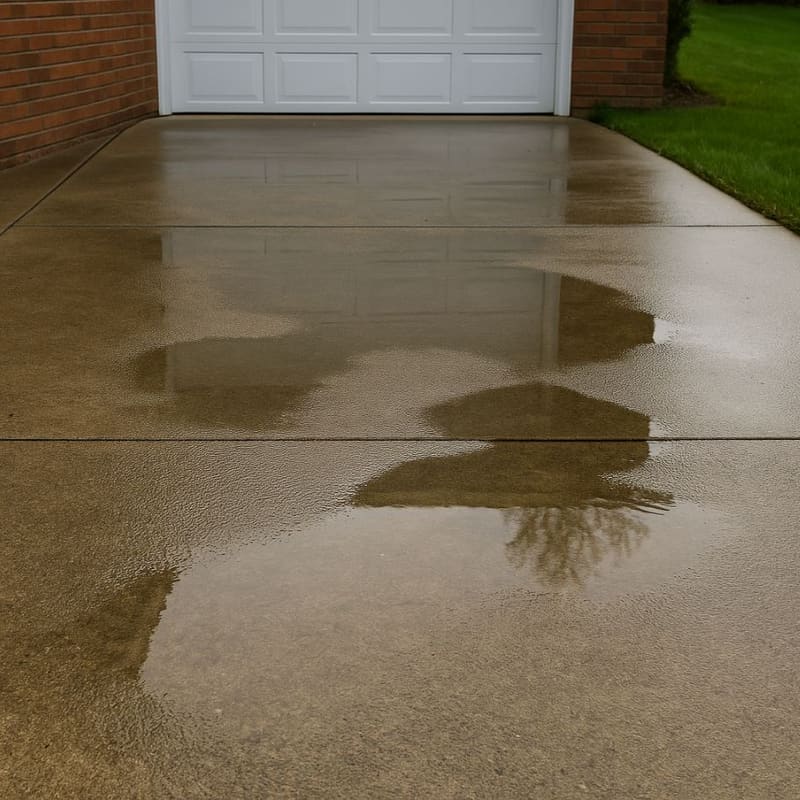
Why Pooling Water on Concrete Slabs Might Point to a Bigger Problem
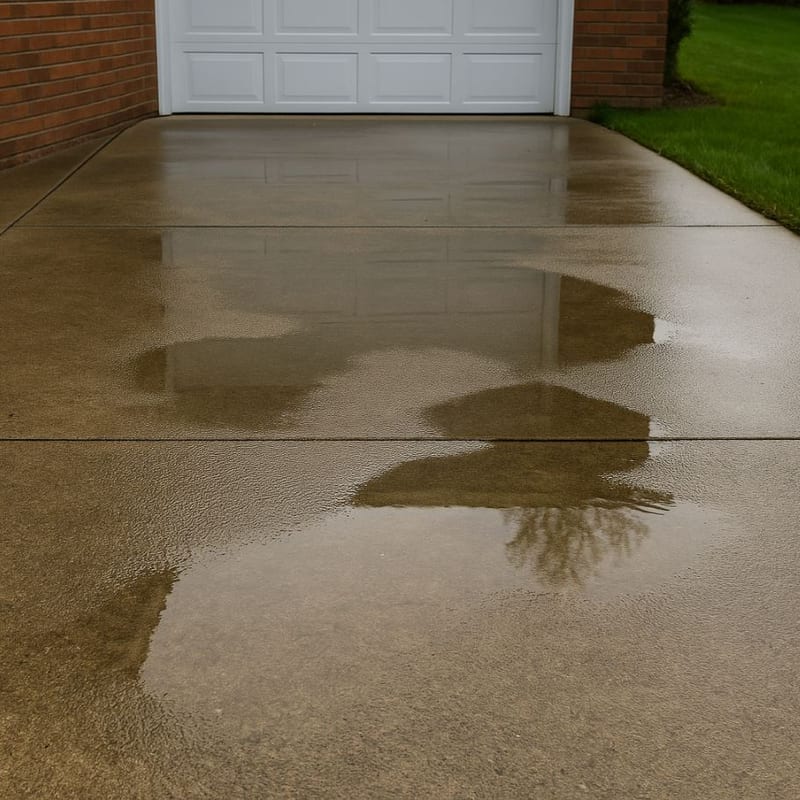
After a rainstorm, you expect water to run off your driveway, patio, or sidewalk, not sit there in a puddle. But if you’re noticing standing water that lingers long after everything else has dried, it could be a sign that your concrete has started to settle unevenly.
Pooling water isn’t just a nuisance. It often means the slab has shifted, creating low spots that collect runoff instead of draining properly. Left unaddressed, those low areas can lead to cracks, erosion, or even water seeping toward your home’s foundation.
At Anchored Walls, we’ve seen how small puddles can point to much larger issues beneath the surface. Our team can assess what’s causing the unevenness and provide a lasting solution to lift and level the slab, restoring safety, drainage, and peace of mind.
Google reviews
What homeowners say.
4.9 / 5 from 286 Google reviews.
★★★★★ Google
Gabe & Taxson did a wonderful job of waterproofing our basement. They worked so hard chiseling concrete, carrying it up the stairs in buckets, then carrying rock and replacement cement down...Read full review
Gabe & Taxson did a wonderful job of waterproofing our basement. They worked so hard chiseling concrete, carrying it up the stairs in buckets, then carrying rock and replacement cement down the stairs to fill in the dug up places, but most of all, they cleaned up the mess! Kip McMillen from United Services recommended this company to do our job. We would recommend this company for any job that you may have.
MM
★★★★★ Google
We worked with Brad to level the concrete slabs on our driveway and patio, and the results are fantastic—everything is perfectly level and we couldn’t be happier with the quality of his...Read full review
We worked with Brad to level the concrete slabs on our driveway and patio, and the results are fantastic—everything is perfectly level and we couldn’t be happier with the quality of his work. What really sets Brad apart, though, is his character and willingness to go the extra mile. While I was out of town, our family car battery died right before my family was supposed to leave for vacation. Brad didn’t hesitate—he went to the auto parts store, picked up a new battery, and installed it so they could get on the road in time. That kind of kindness and effort goes far beyond what you’d ever expect, and it meant so much to us. Truly excellent work and an even better person. Thank you.
AS
★★★★★ Google
Anchored Walls of Winterset stabilized our Basement walls, leveled our driveway, and found an incredible and invisible solution to our 25 year sump pump drain exit. Matt Clayton was...Read full review
Anchored Walls of Winterset stabilized our Basement walls, leveled our driveway, and found an incredible and invisible solution to our 25 year sump pump drain exit. Matt Clayton was consistently kind and patient. He nailed our estimate and was Readily available for questions before, during, and after the project. Debbie was quick, responsive, and friendly to give us speedy and accurate answers to many questions. Finally, Brad was the man who finally solved our 25 year sump pump problem. He was super respectful with my wife, and somehow installed 30 foot of PVC into our yard, leaving zero evidence. You're work is amazing and we are more thankful for you than we can express! All this to say, we strongly recommend and refer Anchored Walls of Winterset. Great job and God bless you for your Efforts.
DT
★★★★★ Google
Anchored Walls revently completed work on our driveway. It was 13 years old and the expansion joints adjacent to the garage, front sidewalk and the foot of it near the street have erroded...Read full review
Anchored Walls revently completed work on our driveway. It was 13 years old and the expansion joints adjacent to the garage, front sidewalk and the foot of it near the street have erroded and water was entering underneath. We were concerned about freeze-thaw damage. The AW team presented the most complete and best estimate. A few days later Zack arrived and did the work in 1/2 day. It was a fantastic job and looks great. He was courteous and very personable. 5-star recommendations all around.
KW
★★★★★ Google
They did a good job lifting our steps. Good price too
They did a good job lifting our steps. Good price too
LE
What Causes Pooling Water on Concrete?
Water should drain away from your home, not collect in pools across your driveway or patio. When it doesn’t, it’s usually because something has shifted beneath the surface.
Here are the most common reasons concrete slabs begin to hold water:
Repair options for your home.
Washout and erosion Poor drainage around your property can lead to water washing away the soil beneath sidewalks, steps, or patio corners. This loss of support causes the slab to sink in places, forming puddles and cracks.
See how it worksImproper grading or installation Sometimes the problem starts with how the concrete was poured. If it wasn’t properly sloped to encourage runoff, or if expansion joints were placed poorly, water may begin to pool even on a new surface.
See how it worksCracks and joint separation As slabs shift and crack, those cracks can open slightly and cause the concrete to dip along one side. Even a small shift is enough to change the flow of water and create a collection point.
If you’re noticing puddles that form in the same spots every time it rains, the concrete likely isn’t the problem on the surface; it’s what’s happening underneath.
See how it works Why Pooling Water Shouldn’t Be Ignored
It’s easy to dismiss a puddle as a minor annoyance, but standing water on concrete is often an early warning sign. If the slab is starting to shift or settle, those low spots will only get worse over time, and the water they hold can speed up the damage.
Here’s why it matters:
Repair options for your home.
Slipping hazard Wet concrete is slippery, especially on smooth surfaces like driveways and walkways. Pooling water increases the risk of slips and falls for family members, guests, or anyone delivering packages to your door.
See how it worksMore cracking and movement When water collects in one area, it puts pressure on the slab and the soil beneath it. That constant moisture softens the base and can lead to further sinking, cracking, or separation.
See how it worksFoundation risks Water that doesn’t drain properly often moves toward your home. Over time, that can lead to moisture intrusion along foundation walls or into the basement, especially in older homes without proper grading or drainage systems.
Freeze-thaw damage In colder months, pooled water can freeze and expand in low spots or cracks, worsening the damage. That cycle of freezing and thawing can accelerate the breakdown of the slab’s surface.
See how it works Concrete doesn’t fix itself Once a slab settles, it won’t return to its original position on its own. Pooling is usually a sign that the concrete has already moved, and without repair, it will likely continue to sink.
If you’re stepping over puddles every time it rains, it’s time to take a closer look. Anchored Walls can help identify what’s going on beneath the slab and lift it back into place.
How Anchored Walls Levels Uneven Concrete
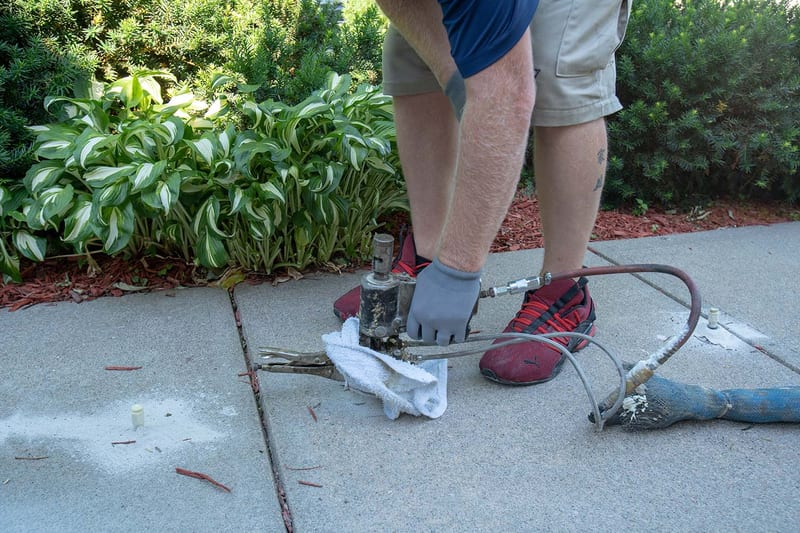
At Anchored Walls, we use a modern concrete lifting method that raises sunken slabs with precision and without tearing out or replacing the concrete. Our polyurethane injection process fills the voids beneath the surface and lifts the slab back into proper position.
Here’s how it works:
- Small injection ports are drilled through the slab at key locations.
- High-density polyurethane foam is injected beneath the concrete.
- The foam expands, filling gaps and gently lifting the slab from below.
- The holes are patched, and the surface is ready for use the same day.
Our poly fill system is fast, clean, and designed to last. Unlike traditional mudjacking, polyurethane doesn’t add unnecessary weight to the soil. It cures quickly, resists water, and provides stable long-term support that helps eliminate pooling and future sinking.
We’ve used this system to fix driveways, sidewalks, patios, and garage floors across IowaIowa. If water is collecting where it shouldn’t, Anchored Walls can lift the slab and restore the proper slope so your concrete drains the way it was meant to.
Schedule Your Free Concrete Evaluation Today
Pooling water on your driveway or patio isn’t just inconvenient; it’s often the first sign that your concrete has started to settle. The longer the slab stays uneven, the more likely it is to crack, shift, or lead to water where it doesn’t belong.
At Anchored Walls, we make it easy to find out what’s really going on. Our team has been helping homeowners in IowaIowa for over 40 years, using modern slab-lifting solutions that are fast, clean, and built to last. If you’re ready to stop stepping over puddles, we’re ready to help. Schedule a free concrete evaluation today, and let us restore the safety and function of your concrete without the cost of full replacement.
Experienced hands. A clear plan.
Helping Iowa homeowners since 1978.
A repair plan built around your home.
Start with a free inspection. We explain what we find and put the recommended work in writing, so you can make an informed decision.
★★★★★Google review
“We worked with Brad to level the concrete slabs on our driveway and patio, and the results are fantastic—everything is perfectly level and we couldn’t be happier with the quality of his work. What really sets Brad apart, though, is his character and willingness to go the extra mile. While I was out of town, our family…”
Adam S.Verified Google review · Winterset, IA · Sep 2025
Lifetime transferable warranty
Protection that stays with the home, including when ownership changes. See the written warranty for covered work.
Money-back guarantee
Your money is never at risk. We stand behind our work with a written money-back guarantee.
Five-star service guarantee
A clear plan, respectful crews, and a commitment to the experience as well as the repair.
Frequently Asked Questions
What causes crawl space moisture?
Crawl space moisture comes from water seepage, improper yard drainage systems, soil settlement and condensation. Regardless of whether your crawl space is dirt, concrete, vented or unconditioned, these lower areas underneath the home tend to endure the most damage due to the many changes in weather conditions, high temperatures and humidity levels. Humidity and moisture easily travel through your crawl space and can begin to infiltrate the structure of your home.Damp or wet crawl spaces are perfect homes for insects, rodents and other critters. This area underneath your home can be extremely unhealthy, destructive and dangerous. Your wet crawl space can also act as a breeding ground for mold and mildew growth. Mold spreads easily throughout your home when it begins in your crawl space. Mold, as well as wood rot, can negatively affect your home’s indoor air quality. That’s why it’s important to take care of crawl space moisture problems as soon as you notice them.
How soon can I use the concrete after leveling?
That depends on the method. Polyurethane foam cures within minutes, allowing use the same day—often within an hour. Slurry-based lifting methods may require a longer cure time, but are still far quicker than replacing the slab.
How long does concrete leveling take?
Most concrete leveling jobs can be completed in just a few hours. The size of the slab, the extent of the sinking, and the repair method all affect timing, but it’s typically much faster and less disruptive than full concrete replacement.
How does concrete leveling work?
Concrete leveling restores sunken or uneven slabs by injecting material beneath the surface to raise it back into place. Small holes are drilled into the concrete, and a lifting compound, such as foam or slurry, is pumped underneath. The slab is gently raised, leveled, and the holes are patched cleanly once the work is complete.
How Much Does Concrete Leveling Cost?
Costs depend on how much material is needed. It’s usually half the cost (or less) of full concrete replacement. We use our own advanced estimating software to provide accurate quotes.
Explore concrete lifting & leveling
Polyurethane Foam Lifting vs. Mudjacking
When concrete starts to sink around your home, whether it’s the front walk, the driveway, or part of your foundation, it’s a sign that something underneath has shifted.
Explore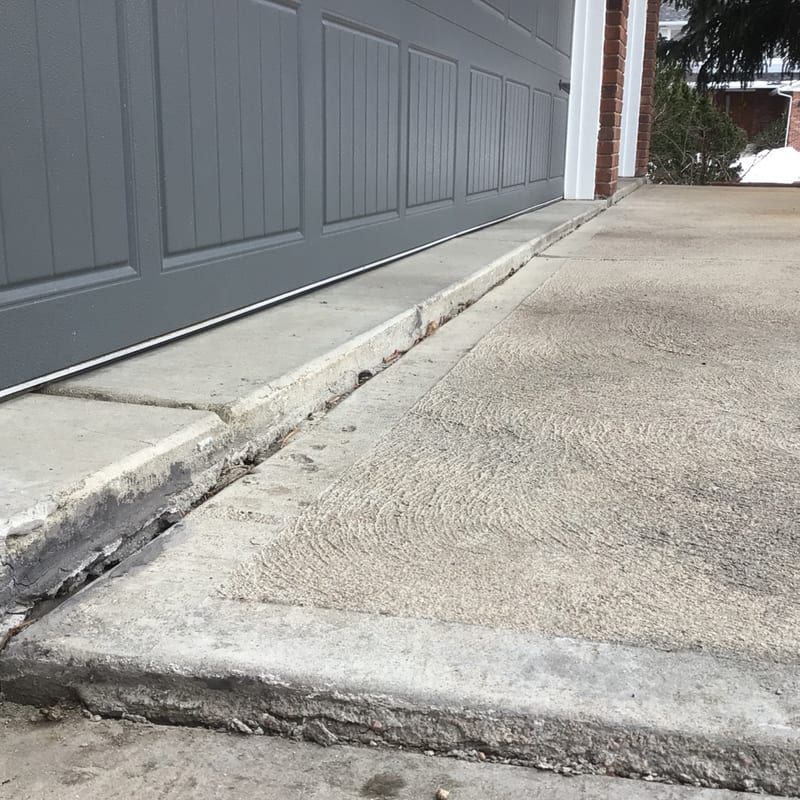
Concrete Driveway Lifting
Using advanced polyurethane injection technology, we raise sunken concrete slabs back to a safe, level position, often in just a few hours.
Explore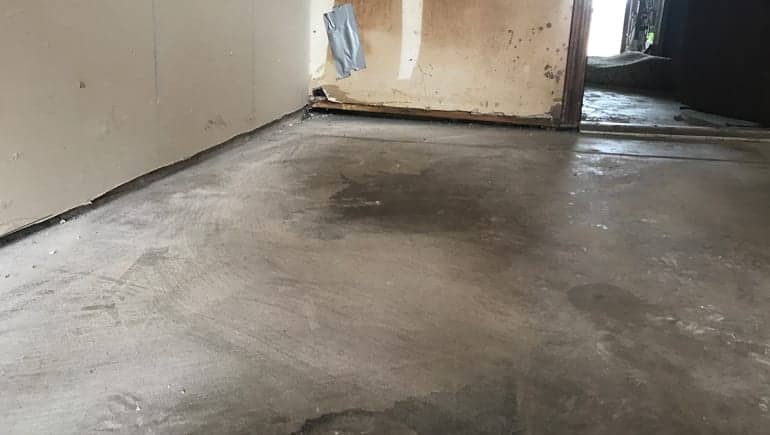
A Proven Solution for Sunken or Uneven Basement Slabs
At Anchored Walls, we use advanced polyurethane injection techniques to lift and re-level basement floors quickly and cleanly.
Explore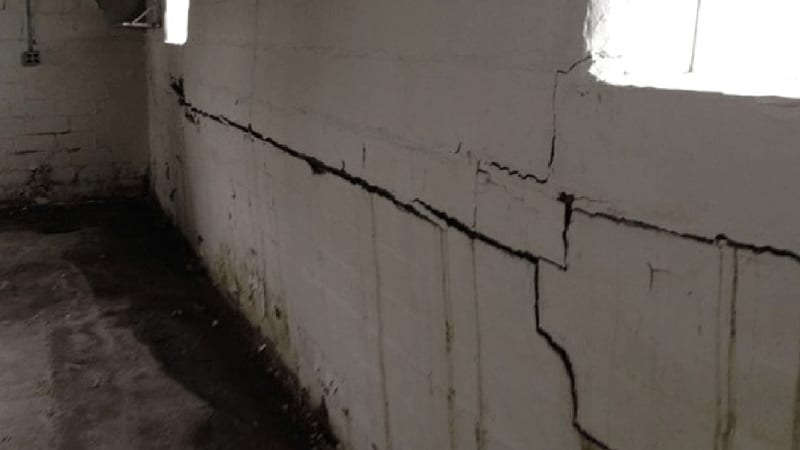
Frost Heave
In our Iowa service area, winter doesn’t just bring snow and ice.
ExploreA local team for your Iowa home.
From our Winterset location, we serve Des Moines, Ankeny, Waukee, Johnston, Urbandale, Clive, Ames, and surrounding communities. Check your ZIP for service at your address.
Highlighted counties contain service ZIP codes. Coverage varies within each county; check your ZIP and confirm your address when scheduling.